

Blogs
One-Way Vision

What is it? (One‑Way Vision)
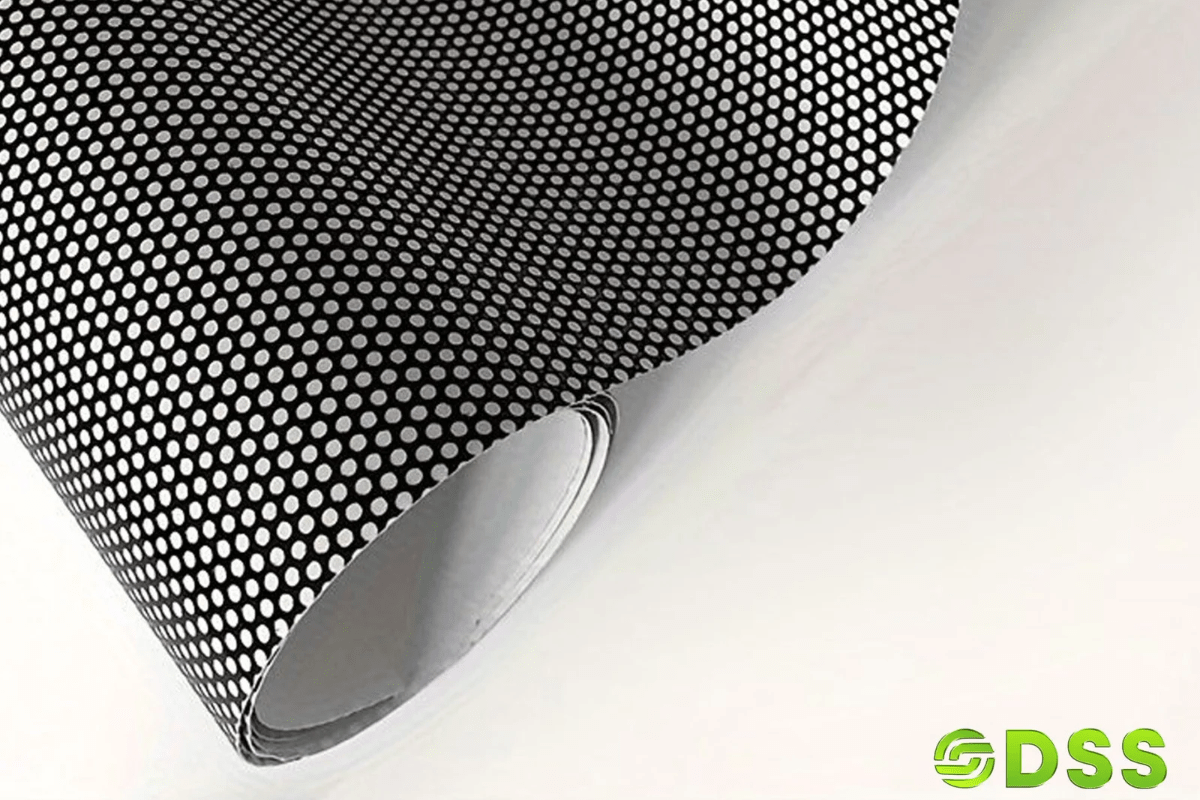
One-Way Vision Film is a specially designed perforated self-adhesive vinyl film that allows full-colour graphics on one side (typically the outside) and transparency from the other side (typically the inside).
In practice, when applied to a glass window or vehicle window:
People on the outside see the printed graphic as a solid image.
People on the inside can still see outwards, because the film’s perforations allow light and visibility through.
How it works
The film has a pattern of tiny holes (micro-perforations) and often a black backing on the adhesive side which faces the inside. As one manufacturer explains:
“The printed one way vision film contains areas of printed graphic … as well as unprinted see-through areas covering up to 50% of the film.”
Because the external side is brighter (due to daylight or lighting), the graphic dominates what the outside viewer sees. From the interior side, the black backing lets you see out through the holes.
Major Features & Specifications
When choosing One-Way Vision Film, here are the key technical features to look at — and why they matter:
Perforation & open area
Typical hole sizes: ~1.5 mm diameters, open (see-through) area around 30-40%.
The open area affects how much you can see through and how strong the printed graphic appears.
Print surface & ink compatibility
Printable white front surface (or other printable finishes) that support eco-solvent, solvent, latex or UV wide-format printers.
The film must handle the ink, outdoor exposure (if external) and stay flat/adhere well.
Adhesive & backing
Adhesive may be permanent or removable depending on the application.
Black (or dark) backing helps visual performance from the inside.
Durability & environment suitability
Specify whether the film is for indoor only, outdoor façade, vehicle windows etc. Some may last 1-3 years or more depending on sun/heat exposure.
Substrate and installation conditions
Suitable substrates: glass windows, shop fronts, vehicle windows (flat or light curves).
Installation requires clean surface, appropriate temperature, and careful application to avoid bubbles or lifting.
Typical Applications
One-Way Vision Film is versatile and commonly used for:
Shopfront windows and retail façades
Transform a plain glass storefront into a promotional graphic surface, while interior visibility remains.Vehicle windows and fleet graphics
Apply on rear windows or side windows of vans, buses or cars to provide branding while allowing driver/passenger visibility.Building wraps and large glass façades
Cover entire windows of a building with printed graphics while maintaining outward view for occupants.Interior partitions, signage overlays and privacy applications
Use in office glass walls or conference rooms where you want graphics + partial visibility.
Benefits
Choosing One-Way Vision Film offers several important advantages:
Maximises advertising/promotion real-estate
Rather than just leaving a window blank, you turn it into a full graphic without sacrificing outward visibility.Privacy & interior visibility
While presenting a bold graphic outside, the inside occupant retains view outwards — ideal for vehicles or internal office spaces.Light transmission & ambient control
The film allows daylight through, reducing need for opaque coverings — and can help solar control or glare reduction depending on specification.Customization/flexibility
Full-colour print, variable shapes, sizes; caters to retail campaigns, brand messaging, vehicle graphics.Cost-effective compared to other signage solutions
Especially for temporary campaigns or flexible uses, this film may cost less than full billboard or external panel signage.
Things to Watch / Best Practice Tips
To get the best results with One-Way Vision Film, pay attention to these installation and environmental considerations:
Light and contrast matters
The one-way effect relies on outside light being brighter than inside. If the interior side is brighter (nighttime interior lighting, dark exterior), the effect may reverse and visibility may suffer.Surface preparation
Clean the glass thoroughly (remove dust, grease, old adhesive residues). Bubbles, debris or uneven surface will degrade appearance and performance.Installation conditions
Avoid extreme temperatures, very humid or very hot glass surfaces – film may shrink, expand, peel.Edge sealing and trim
Especially for outdoor or vehicle applications: edges can lift due to wind, dust or wash/cleaning.Choose correct open-area specification
If the open area % is too low, the inside may feel too enclosed; if too high, print may lose impact. Balance based on application.Durability vs exposure
For vehicle wrap or outdoor façade—exposed to sun/heat/rain—a higher grade film with strong UV resistance, ink compatibility and weather rating is needed. Typical outdoor useful life may be ~2-3 years or more depending on region.Planning removal (if temporary)
Some one-way vinyls are designed for removal; ensure adhesives allow clean removal if required.Print and over-laminate
For exterior use, consider print finishing (e.g., protective laminate) to protect from weather and cleaning.
Use-Case Scenario (UAE Market)
In a dynamic market like the UAE — with high-end retail, busy vehicular traffic, modern glass-façade buildings and significant event/exhibition activity — One-Way Vision Film is especially relevant. Here's how to tailor its use:
Retail storefronts in Dubai / Abu Dhabi
Glass-front stores face heavy foot traffic and large passers-by view. Using one-way vision film enables a bold exterior graphic (for campaign, branding or sale messaging) while customers inside or staff still see out. Because the UAE climate brings strong sun and reflections, choose a variant with proper UV resistance, good backing and consider gloss vs matt finish based on ambient light in the mall or street.
Vehicle fleet & outdoor branding
Corporate fleets, buses or taxis in busy UAE cities can employ one-way vision on rear windows or side windows. This allows branding while maintaining driver/passenger visibility. In the UAE where regulation and visibility matter, ensure the film meets VLT (visible light transmittance) standards for vehicle windows and is suitable for local wind/heat/cleaning conditions.
Event and exhibition use
Exhibition halls in Dubai often have large glass partitions or window bays. One-way vision allows custom graphics for a short-term event while still letting natural light in and visibility from inside. Choose removable or medium-term adhesive depending on duration and ensure fast turnaround for campaign deployment.
Office partitions & privacy signage
In corporate offices in UAE high-rise buildings, interior glass walls are common. One-way vision film can add branding or decorative graphics and still maintain outward view. Because of air-conditioned environments and strong daylight, choose a film that performs under indoor light and doesn't create glare.
Summary
One-Way Vision Film is a powerful signage and branding tool, offering the rare combination of bold external graphics + inside transparency. It effectively turns glass surfaces — shopfronts, vehicles, office partitions — into high-impact visual real-estate without sacrificing functionality.
When applying it in a market such as the UAE — where aesthetics, exterior visibility, modern architecture and environmental conditions (sun, heat, dust, reflection) are key — it’s important to select the right film variant (open area %, adhesive type, durability rating), prepare surfaces carefully, and install with attention to light/contrast and removal/maintenance conditions.
With proper specification and installation, One-Way Vision Film can support campaigns, fleet branding, retail promotions and architectural signage in a flexible, cost-effective and visually striking way.
If you like, I can draft a specification checklist (for UAE market) to help you evaluate different one-way vision film suppliers and variants — would you like that?